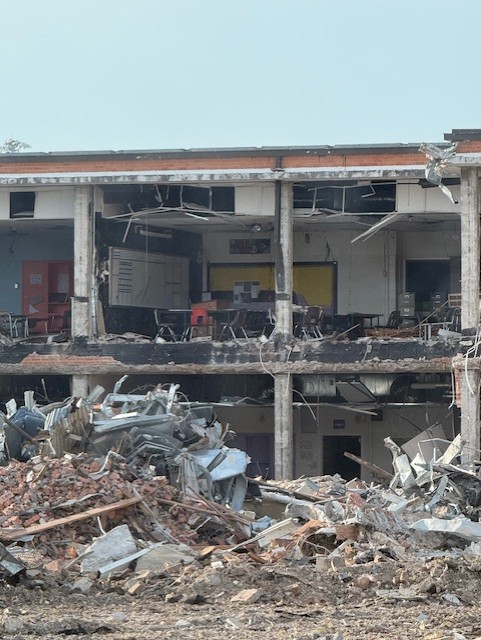










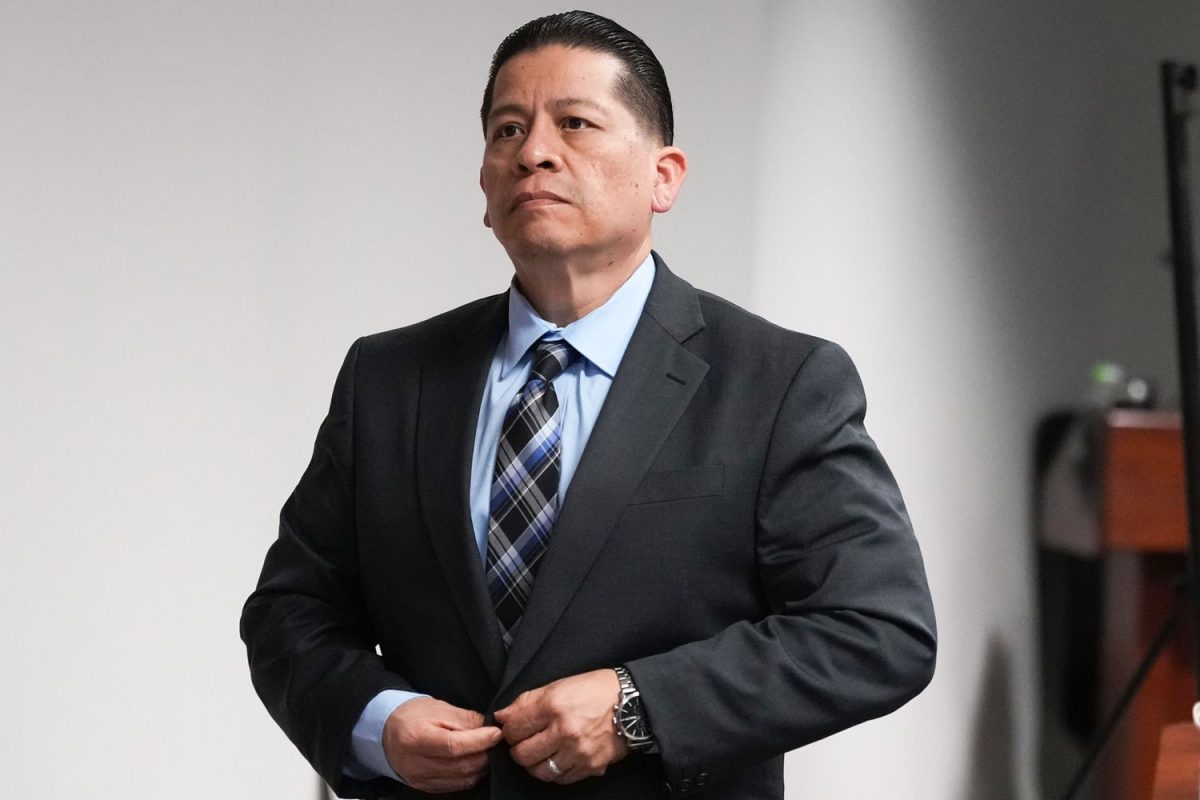
At the trial of former police officer Adrian Gonzalez for his hesitation at the Uvalde elementary school shooting, old wounds that tore Uvalde apart reopened. Gonzalez pled not guilty to all 29 counts of child endangerment and abandonment. If convicted he would have faced at the most two years in prison – a sentence that hardly matches the pain left in the wake of his inaction. What stayed with me wasn’t only the risk of a light sentence, it’s the heartbreaking realization that those tasked with defending our most vulnerable failed them so completely.
On May 24th, 2022, Salvador Ramos had an altercation with his grandmother, ending in him shooting her in the face. She survived with help from the neighbors, but Ramos had already taken her black Ford truck and began driving to his former elementary school.
Ramos arrived at the school at 11:28 am, and according to police, he wore a tactical vest for carrying ammunition, plus a backpack, and all-black clothing, while carrying an AR-15 style rifle and seven 30-round magazines. A witness called 911 before Ramos entered the school and police arrived quickly thereafter.
But Ramos walked straight in through the west entrance—a door designed to lock but somehow didn’t. A July 6 report revealed that an officer had Ramos in his sights before he entered, but held fire, “waiting for his supervisor’s permission.” Clearly a mistake in judgement.
The first place Ramos entered connected Classrooms 111 and 112. According to a surviving student, after shooting multiple children, he used their blood to write “LOL” on the whiteboard. Students also reported the gunman said “Goodnight” to a teacher before shooting the teacher.
“I think he was aiming at me,” Samuel said, a 10-year-old student recalled. “I played dead so he wouldn’t shoot me.”
Officers arrived three minutes after Ramos entered but waited outside for reinforcements. United States Marshalls drove nearly 70 miles to get to the school, arriving at 12:10 p.m., forty-two minutes after Ramos was seen on the property.
The massacre ended at 12:50 p.m. when Ramos opened fire at officers, and they returned fire, killing him. From the moment Ramos entered the building to the moment he was killed, one hour and nineteen minutes passed. One hour and nineteen minutes of an active shooter, moving freely through an elementary school, the students at his mercy. One hour and nineteen minutes of officers hesitating, slowly making advances, and not doing their job as children prayed for rescue.
One hour and nineteen minutes.
Students called 911, screaming for help. Teachers threw themselves between bullets and still-alive bodies. Outside, desperate parents fought to reach their kids. Because at the end of the day, these were children—nine and ten-year-olds. Children who had to watch their friends die, children who could hear the police through the walls, just out of reach, children who had to play dead, using the bodies and blood as cover, hoping the shooter wouldn’t notice them.
A child should never have to wait over an hour for help.
“There’s no winning in a scenario like this.” Isabelle Beasley reminded me. “Even if you do survive, you lose friends, your trust in the school and the system, and you lose the love for your own life.” A child should never have to survive with the guilt of being alive. No one should. Especially with over 400 officers at arm’s length.
After more than seven hours of deliberation, a jury in Corpus Christi, Texas, found him not guilty on all 29 charges. Another officer, former Uvalde school police chief Pete Arredondo, also faces criminal charges over the school’s response, and that case is ongoing.
