
















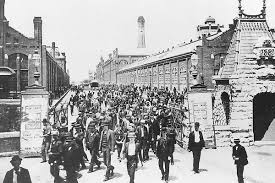
During the summer of 1894, the Pullman Strike would be immortalized as one of the many movements that aided a step forward in the acknowledgment of the national labor policy in the United States during a period of deep economic depression.
The Pullman Strike was a national-wide protest and boycott that came to be from the reduction of pay that workers suffered, as well as the prices of rent and other essentials going up as they had to work abhorrent hours just so the workers could feed not only their families, but themselves. Across the plains of the United States, the ARU launched a nation-wide boycott against all trains that carried Pullman passenger cars.
The boycott lasted from May 11th to June 20th, 1894. The founder of Pullman–George Pullman–was criticized for the policies and refusal to negotiate with his workers. Although he persistently fought to defend his business and decision, his image was soon tarnished for his lack of acknowledgement and compassion.
Even though the Pullman Strike was not successful in meeting the immediate goals, the strike demonstrated national labor’s solidarity, as well as prompting the creation of the national wide holiday: Labor Day.
