

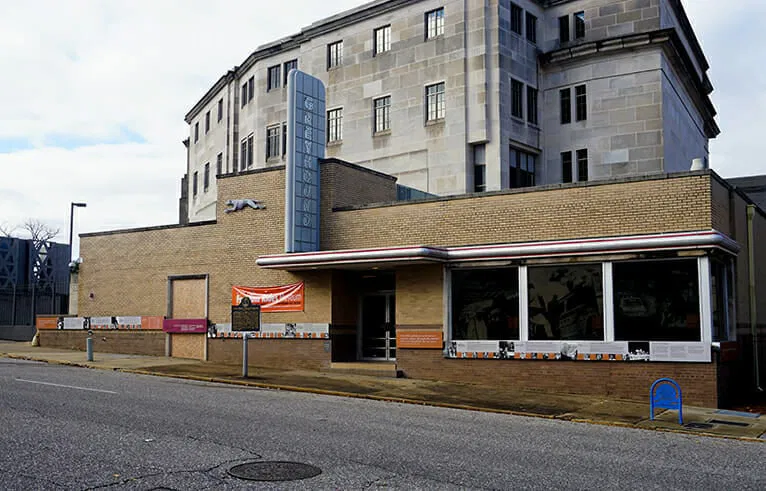









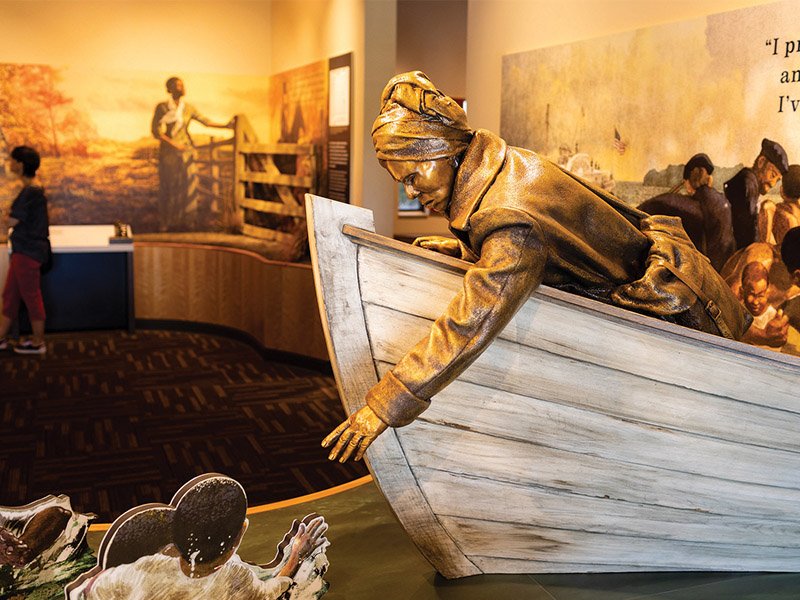
Harriet Tubman’s Underground Railroad, located at Dorchester County, Maryland, holds thousands of historical artifacts, including the history of the extraordinary Harriet Tubman.
Tubman, whose original name is Araminta “Minty” Ross, was born to enslaved parents around March 1822 at Peter’s Neck in Dorchester County, Maryland. Harriet, the fifth of nine children, hated and feared the horrible slavery condition African American people endured.
At the age of six, her owners hired out to other families and forced the child to perform tasks like checking muskrat traps and field work. Enslaved people were regularly subjected to beatings. Tubman suffered a traumatic permanent injury as a teenager when an overseer threw a heavy block of metal intending to hit another enslaved person, but instead struck her in the head, causing lifelong seizures, headaches and narcolepsy.
At the age of 27 years old, Tubman and her brothers, Ben Ross and Henry Ross, managed to escape from slavery in Maryland in September 1849. She traveled approximately 90 miles north to Philadelphia. She fled to avoid being sold and separated from her family. She set out alone and navigated by the stars to reach Pennsylvania. She managed to help 70 enslaved people escape to freedom by acting as a conductor on the Underground Railroad. She often carried a pistol for protection and to intimidate any passengers who felt fearful and wanted to turn back. She came up with a trusting tactic and would drug babies to keep them quiet to avoid detection.
Harriet Tubman dedicated her life to helping other enslaved people and working as a Union spy and Nurse during the Civil War, and later settled in Auburn, New York. Despite suffering from health issues rooted by her head injury, she remained active. She later passed away from pneumonia on March 10, 1913.
The Harriet Tubman Underground Railroad National Historical Park was established in 2014 to preserve the Maryland landscape where Tubman escaped from and returned to and guided others to freedom. The park remains active today, continuing to educate others on the history that built America.
