















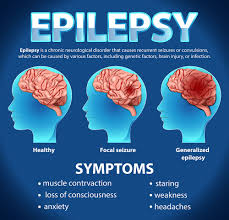
Epilepsy is a chronic brain disorder characterized by recurrent unprovoked seizures caused by abnormal activity in the brain. It is not uncommon for people to have it. There can be many risks or causes such as strokes, tumors, self-medicating, brain injury, and inherited genetic factors. There are a few different types of epilepsies, but the two main types are focal and generalized seizures.
Focal seizures are a smaller type of seizure that starts in one brain area. This is the type of seizure I started having when I was diagnosed with Juvenile Myoclonic Epilepsy. Focal seizures can cause motor, sensory, or emotional symptoms like limb jerking, lip smacking, chewing, or confusion or a Deja vu feeling. For some, it can make them feel like they are living in a dream. I had experienced that a few times, especially from lack of sleep. These seizures are unaware and only last for a few seconds to two minutes. These seizures make a person unaware during that time. This can be dangerous if they are walking, undiagnosed, holding something, or driving.
Now, I have grand mal seizures also known as generalized seizures. This type of seizure is the more violent type and what most people picture when they think of seizures. Unlike focal seizures that only occur in one area of the brain, generalized seizures result in all areas of the brain. During a grand mal seizure result in loss of consciousness, sometimes shaking, sometimes tensing of the muscles, foaming, and some people may pee. Symptoms differ from person to person, but they are all just as serious. The causes of these seizures are just as serious as well. Some of the causes may vary depending on the person, but the most common causes may be a high fever, lack of sleep, dehydration, alcohol, and stress.
Not every generalized seizure should someone dial 911. Unless it lasts more than five minutes, if the person got severely injured, if the person has trouble waking up, a second seizure starts immediately after the first, or if it happens in water. A typical generalized seizure lasts from one to three minutes and should be timed by someone around the person. The person having the seizure should be turned on their side, head should be kept supported up so it doesn’t hit the ground, and do not try to hold them down. Seizures are very scary for someone to experience and for someone to witness and they can lead to other issues so it’s important they are taken seriously. Approximately 1% of the population or about 50 million people have active epilepsy worldwide.
